
Webinars

Webinar: EPA’s Greenhouse Gas Reduction Fund & Green Financing 101 Webinar:
EPA’s $27 billion Greenhouse Gas Reduction Fund (GGRF) will provide competitive grants to finance clean energy and climate projects that reduce greenhouse gas emissions. As the “single largest investment in clean energy, environmental justice, and carbon pollution reduction in American history,” what are the impacts and opportunities for community-based organizations? The GGRF Best Practices Alliance…
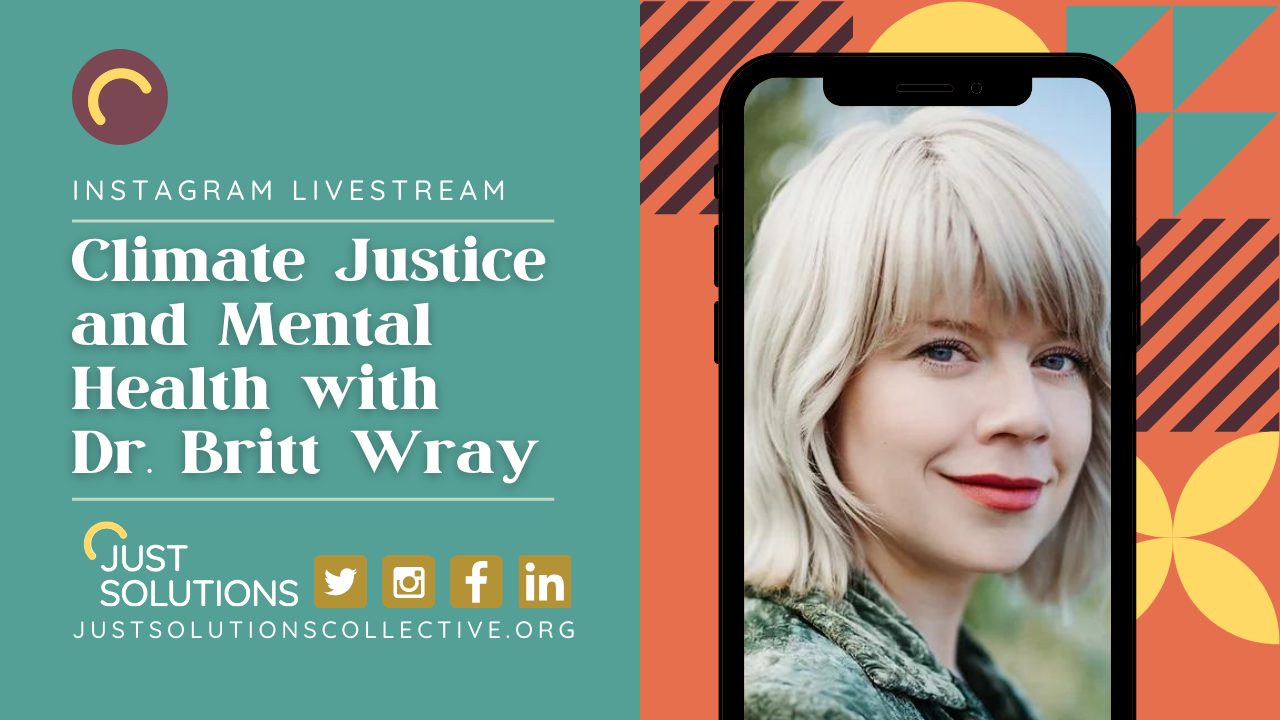
IG Live: Climate Justice and Mental Health with Dr. Britt Wray
Watch our IG livestream with Dr. Britt Wray, author of “Generation Dread” and Director of CIRCLE at Stanford Psychiatry in the Stanford School of Medicine, where discuss the way that climate anxiety affects different communities. Dr. Britt Wray is the Director of CIRCLE at Stanford Psychiatry, a research and action initiative focused on Community-minded Interventions…
Webinar: What it Really Means to be a Federal Grantee – Accomplishments and Challenges
Emerald Cities Collaborative, The Climate & Clean Energy Equity Fund, and Just Solutions hosted an informative webinar about the experience of applying to and receiving federal funding. As opportunities for federal funding for environmental justice efforts become more available, it is essential that community organizations understand the process and challenges of being a federal grantee.…
Webinar: Exploring CCS and Environmental Justice in Louisiana
nvironmental and climate justice advocates have consistently emphasized the potential detrimental effects of Carbon Capture and Storage (CCS) technologies on our communities. In the first installment of our CCS series, we delved into the intricacies of carbon capture and its use and storage, highlighting its immediate and long-term implications for environmental justice communities across the…

IG Livestream with Faithfully Sustainable
This is a recording of our Instagram livestream event with Faithfully Sustainable in September 2023. Tayler Ward, Communications and Education Programs Manager, had a conversation with Kadjahtou Balde, co-founder of Faithfully Sustainable, on how the Muslim community is impacted by the climate crisis and the solutions that an Islamic framework can offer. Faithfully Sustainable Website:…
Webinar: Community-Created Solutions to Climate Vulnerability and Resilience
In our third and final webinar from The Perfect Storm of Extraction, Poverty, and Climate Change Webinar Series, we hosted a panel discussion with community leaders interviewed in The Perfect Storm of Extraction, Poverty, and Climate Change. The voices of community members and representatives were highlighted through the report, as we explored the “pre-existing” economic,…
Webinar: The Effects of Health and Housing Quality on Climate Vulnerability and Resilience
In part two of The Perfect Storm of Extraction, Poverty, and Climate Change Webinar Series, the authors of the report provided an overview of the health and infrastructure issues and findings highlighted in Just Solution’s recent report, “The Perfect Storm of Extraction, Poverty, and Climate Change: A Framework for Assessing Vulnerability, Resilience, Adaptation, and a…
Perfect Storm of Extraction Webinar Series: Economic Drivers of Climate Vulnerability & Resilience
Hear from the authors of Just Solution’s recent report, “The Perfect Storm of Extraction, Poverty, and Climate Change: A Framework for Assessing Vulnerability, Resilience, Adaptation, and a Just Transition in Frontline Communities,” followed by a panel discussion featuring experts in the field working on solutions to these issues. Through a case study approach, Just Solutions…
Demystifying the Federal Funding Landscape
Emerald Cities Collaborative, The Climate & Clean Energy Equity Fund, and Just Solutions demystify the federal funding process and discuss the pathways you can use to access funding for your community. This webinar explored competitive grants, formula grants, and tax credits, providing clarity on how each of these mechanisms works and the opportunities they present.…
Webinar: What you need to know about the Greenhouse Gas Reduction Fund
The EPA recently announced parameters for its $27 billion Greenhouse Gas Reduction Fund. This fund will provide competitive grants to finance clean energy and climate projects that reduce greenhouse gas emissions. As the “single largest investment in clean energy, environmental justice, and carbon pollution reduction in American history,” what are the impacts and opportunities for…