Arjun Makhijani, PhD. (he/him), Senior Fellow at Just Solutions, is President of the Institute for Energy and Environmental Research in Takoma Park, Maryland. He earned his Ph.D. from the Department of Electrical Engineering and Computer Sciences at the University of California, Berkeley in 1972. A recognized authority on energy issues, Dr. Makhijani is the author and co-author of numerous reports and books on energy and environment related issues, including Prosperous, Renewable Maryland: Roadmap for a Healthy, Economical, and Equitable Energy Future (2016). More recently, in 2021, he authored Exploring Farming and Solar Synergies. Dr. Makhijani has testified before Congress, and has appeared on ABC World News Tonight, the CBS Evening News, CBS 60 Minutes, NPR, CNN, and BBC, among others. He has served as a consultant on energy issues to utilities, including the Tennessee Valley Authority, the Edison Electric Institute, the Lawrence Berkeley Laboratory, and several agencies of the United Nations.
Authors: Jennifer Moon, PhD. and Arjun Makhijani, PhD. In conversations about energy affordability, the unique affordability challenges that rural communities face can be overlooked. Rural communities have lower median household […]
Across the country, households are struggling to pay for mounting energy costs. From state to state, the costs of everything from mitigating wildfires to integrating new data centers loads are […]
By Arjun Makhijani, PhD – Unaffordable energy bills impact all of society—including those who can afford to regularly pay their own bills. The direct impacts of unaffordable energy for families […]
With many of our partners, Just Solutions urges the Federal Housing Finance Agency (FHFA), which oversees Fannie Mae and Freddie Mac, to take immediate action requiring that the home mortgages […]
Just Solutions, along with many of our partners, urges the Federal Housing Finance Agency (FHFA) to require that the home mortgages they back meet updated energy efficiency standards. As the […]
Author: Arjun Makhijani, PhD, Senior Fellow, Just Solutions. President Institute for Energy and Environmental Research. Hiroshima was obliterated on August 6, 1945 razed to the ground by just one bomb […]
Focusing on methane and natural processes to reduce greenhouse gas concentrations In my first blog post of this series, I had noted that we need to do more than eliminate greenhouse […]
Point-source carbon capture and sequestration: Also not the answer. In the first blog post of this series, I explored air capture of CO2 and found it unsuitable as a way […]
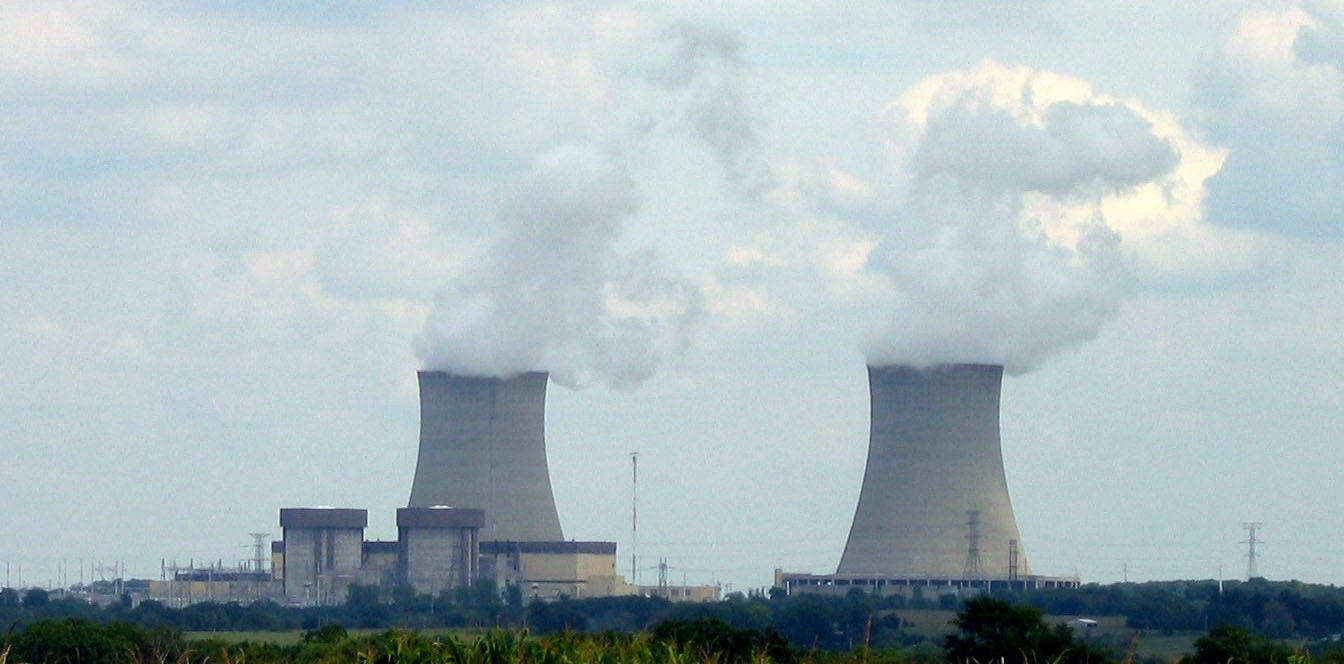
Nuclear Power: Not clean, not necessary, not affordable; not timely The Nuclear Energy Institute, the industry’s think tank, claims “existing reactors as well as new advanced nuclear technologies will provide the […]
Decarbonizing the U.S. electricity sector by phasing out existing nuclear is technically, economically, and environmentally better This post is a complement to a prior one, which dealt with: (1) Is […]
Keeping the lights on with solar and wind energy I’ve written two posts on nuclear – one on new plants and the other on existing ones – indicating we shouldn’t […]
Three major electricity grid disasters in just over a year are exemplary of the havoc that climate extremes are causing and what needs to be done about it: (i) the […]
Even before the COVID-19 pandemic, in 2017, about 50 million U.S. households were under such economic stress that they could not cover an unexpected $400 expense, like the breakdown of a […]
Websites store cookies to enhance functionality and personalise your experience. You can manage your preferences, but blocking some cookies may impact site performance and services.
Essential cookies enable basic functions and are necessary for the proper function of the website.
Name
Description
Duration
Cookie Preferences
This cookie is used to store the user's cookie consent preferences.
30 days
Google Tag Manager simplifies the management of marketing tags on your website without code changes.
Name
Description
Duration
td
Registers statistical data on users' behaviour on the website. Used for internal analytics by the website operator.
session
cookiePreferences
Registers cookie preferences of a user
2 years
Statistics cookies collect information anonymously. This information helps us understand how visitors use our website.
Google Analytics is a powerful tool that tracks and analyzes website traffic for informed marketing decisions.
Contains information related to marketing campaigns of the user. These are shared with Google AdWords / Google Ads when the Google Ads and Google Analytics accounts are linked together.
90 days
__utma
ID used to identify users and sessions
2 years after last activity
__utmt
Used to monitor number of Google Analytics server requests
10 minutes
__utmb
Used to distinguish new sessions and visits. This cookie is set when the GA.js javascript library is loaded and there is no existing __utmb cookie. The cookie is updated every time data is sent to the Google Analytics server.
30 minutes after last activity
__utmc
Used only with old Urchin versions of Google Analytics and not with GA.js. Was used to distinguish between new sessions and visits at the end of a session.
End of session (browser)
__utmz
Contains information about the traffic source or campaign that directed user to the website. The cookie is set when the GA.js javascript is loaded and updated when data is sent to the Google Anaytics server
6 months after last activity
__utmv
Contains custom information set by the web developer via the _setCustomVar method in Google Analytics. This cookie is updated every time new data is sent to the Google Analytics server.
2 years after last activity
__utmx
Used to determine whether a user is included in an A / B or Multivariate test.
18 months
_ga
ID used to identify users
2 years
_gali
Used by Google Analytics to determine which links on a page are being clicked
30 seconds
_ga_
ID used to identify users
2 years
_gid
ID used to identify users for 24 hours after last activity
24 hours
_gat
Used to monitor number of Google Analytics server requests when using Google Tag Manager